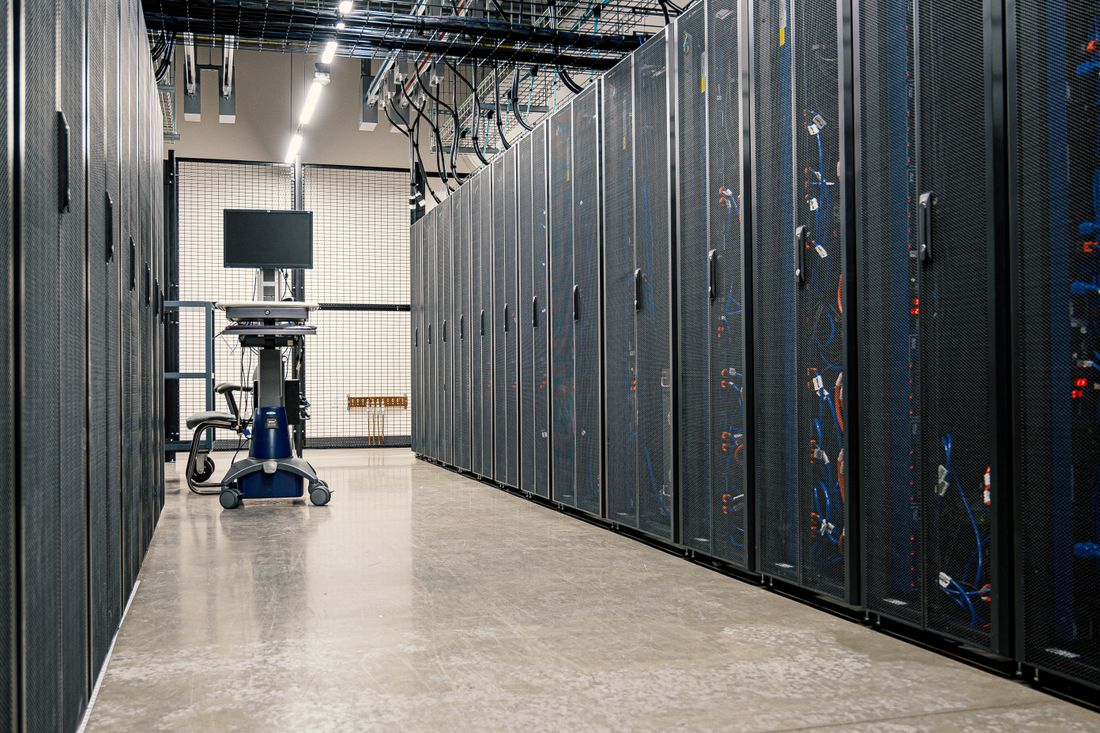
In November 2020, a 35 rack data centre asked Interact for an analysis of its current estate and the refresh scenarios that sit alongside it. The inputs were modest: make, model, CPU, RAM. The output, projected over five years, was less so.
- £850,000 in saving
- 1,812,300 kWh of energy
- 460,000 kg CO2e avoided
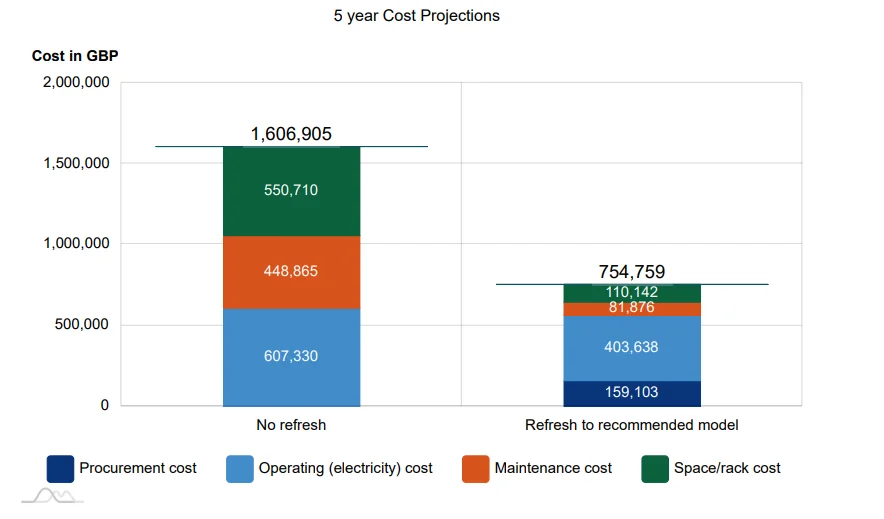
The CIO's first response was that, alongside the headline numbers, the server count itself could come down by roughly 75%. The 773 servers running the current workloads could be replaced by 151 refurbished machines. The organisation had been quietly weighing up a second building to absorb its projected growth. That conversation could now be set aside.
Where the realistic action sits
A full estate replacement is rarely how this work actually lands. The more useful application is at rack and server level. A strong starting strategy is to address the 10% of servers performing worst on energy, and refresh those on a rolling basis. In this case, the maths worked out to around 80 servers consolidating into 15. The same logic moves upwards: three racks of mixed hardware can often be consolidated into half a rack of the right replacement choice.
Maintenance is the line most easily missed
A separate saving sits in maintenance costs. Our calculation assumed a third party maintenance contract at one of the lowest current market rates, £70 per machine. AWS estimates maintenance more conservatively, at 18 to 22% of the upfront server cost. Either way, fewer machines compound the saving.
What it means for the SECR report
Snapshot reporting like this is more than a procurement exercise. Since 1 April 2019, large UK companies have been required to report on their UK energy use and carbon emissions in the Directors' report under Streamlined Energy and Carbon Reporting (SECR). The standard covers direct emissions from transport (scope 1) and indirect emissions from electricity usage (scope 2). Interact produces both figures alongside the cost guidance.
The dataset informs the rest of the planning the same buyer is doing: lift and shift, rack-level consolidation, and the five-year strategic refresh that decides what gets retired, kept or replaced.
For most data centres, the immediate cost return sits in the 10% of servers performing worst. The infrastructure return sits in the floor space avoided by consolidation. The first real-world run of the tool showed both, in numbers a CIO could take to a board on the same afternoon. To see what the equivalent reading looks like for your estate, contact us.