Behind every server lies a complex ecosystem of mines, refineries, smelters, and globally stretched supply chains. These processes extract and transform dozens of metals and minerals, many of which are classified as Critical Raw Materials (CRMs) or Rare Earth Elements (REEs).
As governments introduce regulations such as the Corporate Sustainability Reporting Directive (CSRD), Critical Raw Materials Act (CRM Act), and Conflict Minerals Regulation (CMR), EU companies are now expected to understand and report on the raw materials inside their technology stack, and will be held increasingly accountable for their upstream impacts.
This blog explores the material footprint of servers, highlights the sustainability risks in acquiring these resources, and explains why data centres need to expand sustainability thinking beyond carbon to ethical sourcing and circular economy approaches.
What's inside a server
A server is in effect a concentrated bundle of raw materials that make up its components. The top materials by weight found in a typical 2U server configuration (excluding packaging materials), according to the 2015 JRC-IES analysis, are Steel (53%), Aluminium (6%), Glass Fibre (6%), Plastics (6%), Copper (5%), Brominated Epoxy Resins (4%), and Ferrous metals (1%).
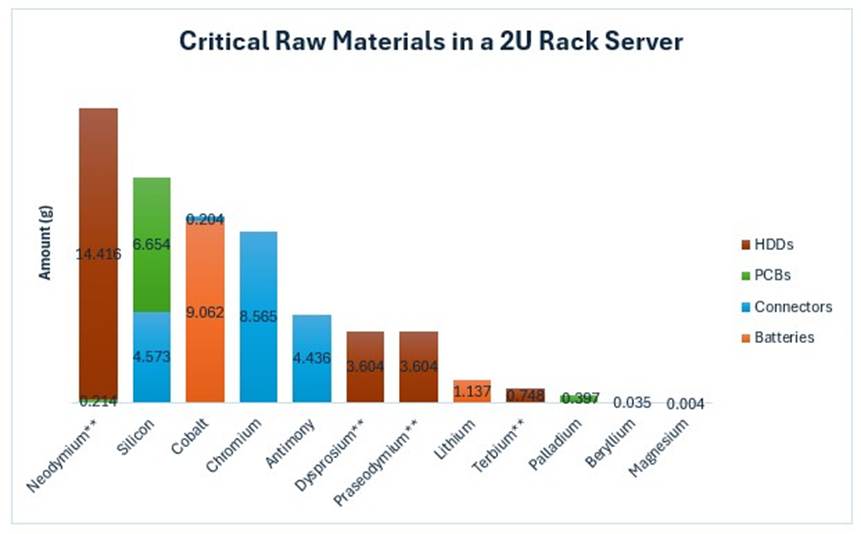
The main CRMs are located in HDDs, PCBs and connectors, as well as in batteries, with the most important weight coming from neodymium in the magnets of the HDD, followed by silicon in the die of integrated circuits and cobalt in batteries, as shown in the chart below (with rare earth elements marked separately).
Why CRMs and REEs pose a major sustainability risk
Servers' dependence on CRMs and REEs introduces complex sustainability and ethical challenges across multiple dimensions, from material extraction and mining to refining, assembly and manufacturing.
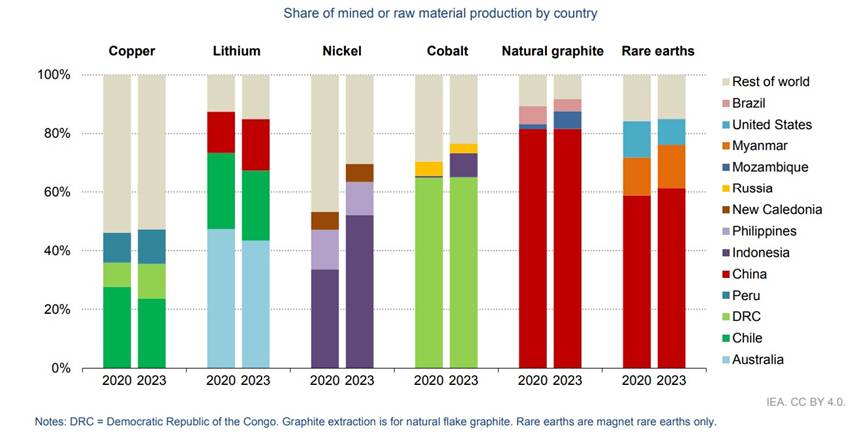
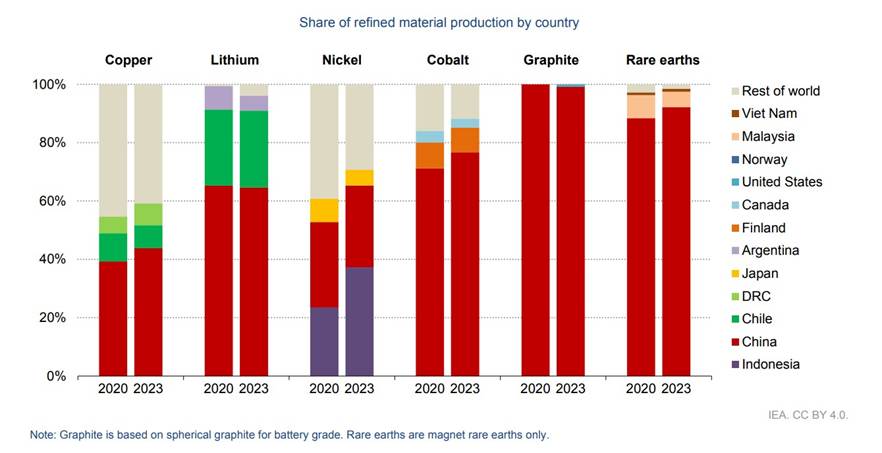
First, they create economic instability due to the geographically concentrated and high-risk supply chains. Many materials are mined, refined and/or owned by just a few countries, making global server supply chains extremely fragile and vulnerable to geopolitical tensions and trade restrictions. The graphs below, from the 2024 IEA report, show the rising levels of geographical concentration for mining and refining some of the materials used in server production.
Moreover, some of these materials, especially REEs, have few viable alternatives. Neodymium and dysprosium magnets used in server fans and precision components have no commercially viable substitutes with similar performance. Heavy reliance on these non-replaceable REEs locks the digital sector into high-risk supply chains.
Because supply is concentrated and fragile, political, environmental and social disruptions cause global price swings and market volatility. According to the IEA, prices for critical minerals tend to be more volatile than for fossil fuels and base metals.
Secondly, the extraction and refining of these materials cause severe environmental damage. These processes generate toxic wastewater and radioactive byproducts, and require water and energy-intensive operations, often reliant on coal-based electricity in countries with less stringent environmental regulations, causing severe pollution, resource depletion and ecosystem damage. In Salar de Atacama, Chile, one of the country's key mining regions, lithium and copper extraction have reportedly consumed over 65% of the local water supply, depleting available water in an already water-scarce region. Communities in Chile and Argentina have also reported contamination of fresh water with toxic waste from lithium operations. Similar concerns about water use and contamination have also been reported for other mining zones, such as cobalt in the DRC and graphite in China.
Thirdly, these processes often take place under conditions that pose serious human rights violations and social justice concerns, including labour abuses, unsafe conditions and community conflict. Amnesty International documented forced evictions, child labour, and dangerous conditions tied to the rapid expansion of cobalt mining in the DRC, on top of the potentially fatal health effects of prolonged exposure to cobalt that miners face.
Material sourcing comes with economic, social and environmental risk that needs to be carefully assessed by companies so that they make sustainable decisions.
What companies can do next to improve supply chain traceability
As awareness of supply chain sustainability grows, transparency about the raw materials inside our technology becomes increasingly important.
Most major server vendors publicly report on conflict minerals and the "3TG" minerals (tantalum, tin, tungsten, and gold), which have long been under scrutiny due to their links to conflict regions. Alongside these, cobalt is also commonly included in their disclosures. Fujitsu and Lenovo publish detailed reports listing smelters and refiners in their supply chains, showing a commitment to responsible sourcing. HPE and Dell participate actively in industry programmes like the Responsible Minerals Initiative (RMI) and require suppliers to disclose mineral sourcing using standardised frameworks like the Conflict Minerals Reporting Template (CMRT). Supermicro also addresses supply chain labour standards but offers less detailed disclosure compared to its peers.
While the existing focus on conflict minerals is a positive step toward ethical sourcing, when it comes to other CRMs and REEs essential for many server components, transparency is still limited and they rarely appear in public vendor reports.
To build sustainable supply chains, companies should begin by conducting a comprehensive bill of materials assessment and map material exposure, identifying components that rely on high-risk minerals. Interact specialises in supporting clients through this process, providing detailed material billing for servers. This enables targeted supplier engagement to request full visibility into the origin, processing, and refining of these materials.
Beyond supplier engagement, adhering to established due diligence frameworks like the OECD Guidance and Responsible Minerals Assurance Process (RMAP) will foster greater transparency.
Conclusion: sustainability starts beneath the surface
Reducing digital energy use and emissions is important, but true sustainability requires understanding the critical minerals inside ICT hardware. By assessing risks and demanding supply chain transparency, companies can strengthen resilience, meet ESG regulations, take calculated decisions to reduce social and environmental impact, and build hardware strategies fit for the future.